Cameras, locks, and doorbells that belong to the house — not to five different apps.
Most homes collect security piecemeal — a doorbell from one company, cameras from another, smart locks from a third, each with its own app and its own password. It works until it matters. We design security as part of the home: cameras placed deliberately during the walkthrough, locks and doorbells on the same system as the lighting and audio, footage stored where you control it. One interface, one logic, every member of the family able to use it.
Placed by walkthrough, not by guesswork — entries, driveway, perimeter, pool. Clean mounting, concealed wiring, image quality that holds up at night.
See and speak to the front door from the kitchen touchscreen, the theater, or the phone. The doorbell can pop the camera feed onto whatever room you are in.
Locks on the same system as everything else. Let the housekeeper in with a temporary code, see the door lock itself at night as part of the goodnight scene.
Footage records to hardware in your own rack by default — you control what is stored and who sees it. Remote viewing from the phone, anywhere.
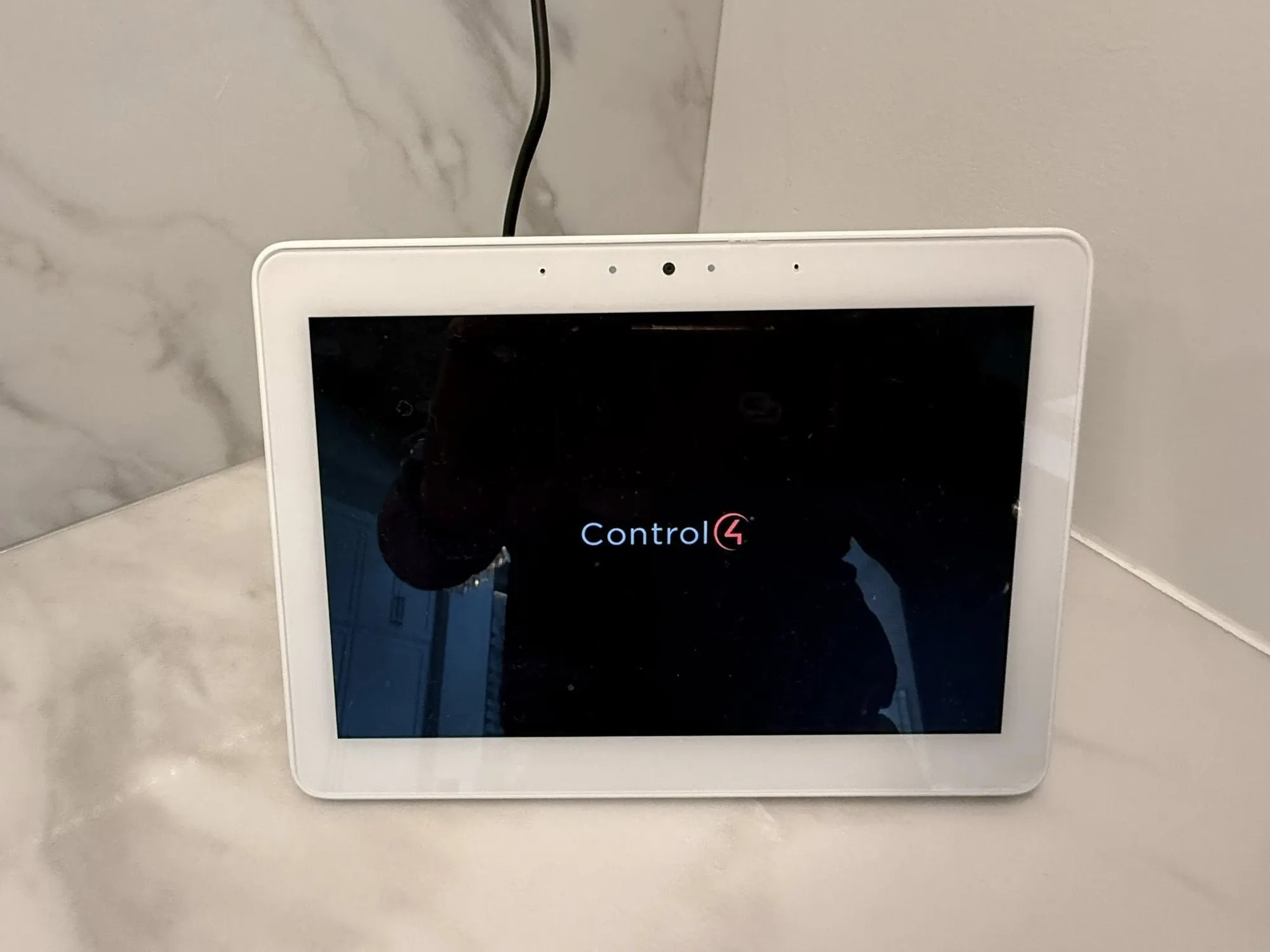
Cameras and locks surface on the same Control4 touchscreens and keypads as the lighting and audio. No fifth app, no second password.
Gate cameras, driveway alerts, coverage across acreage — outdoor-rated hardware on the same network and the same screens.
Camera placement is a design problem. The goal is coverage of the entries, the approaches, and the blind spots — with mounting that respects the architecture and wiring you never see. Scott walks the property, looks at how it is actually approached and used, and designs the coverage around that. The same walkthrough covers locks, the doorbell, and how the family wants to be notified.
Because the security layer rides on the same system as the rest of the home, it participates in the scenes. The goodnight button locks the doors. The camera feed follows you to whatever screen is nearest. Vacation mode arms everything and makes the house look lived in.
By default, recordings live on hardware in your own equipment rack — not on a subscription server you rent forever. You decide retention, you control access, and remote viewing from the phone still works from anywhere. Where an existing camera system is already in the house, we can often adopt it into the new interface rather than replacing it.
Both. Some projects are camera coverage only; others are the full layer — cameras, video doorbell, smart locks, and alerts, integrated with the rest of the home. The walkthrough scopes what the property actually needs.
To a recorder in your own rack by default. You own the hardware, you set the retention, you control who has access. Remote viewing from the phone works from anywhere.
Yes — every camera is viewable from the phone, and from any touchscreen or TV in the house when you are home.
Natively. Cameras, locks, and the doorbell surface on the same touchscreens, keypads, and app as the lighting and audio. The doorbell can put the front-door feed on the room you are sitting in.
Not necessarily. If the existing hardware is workable, we can often adopt it into the integrated system. If it is not worth keeping, we will tell you plainly and show you what we would replace it with.
Bellah designs and installs in Westlake Hills, Lakeway, Bee Cave, Dripping Springs, Barton Creek, Cedar Park, Dallas, Houston. See home automation, home theaters, or our full service area.
Scott does the walkthrough himself. About an hour. No charge, no quote on the spot — just a real conversation about what fits the home.
Book a Free Walkthrough