The network is the foundation. Everything else in the house stands on it.
Streaming that stutters, cameras that drop, video calls that freeze in one corner of the house — none of that is a device problem. It is a network problem. A modern home runs dozens of connected devices at once: 4K streams, security cameras, work-from-home video, gaming, music in six rooms. The router the internet company left on a shelf was never built for that. We design and install home networks the way businesses do — planned coverage, wired backbone, managed hardware — sized for the way your family actually uses the house.
Access points placed by design — walkthrough first, coverage mapped to the floor plan, wired back to the rack. The WiFi follows the family: kitchen, office, patio, pool.
A wired backbone under everything. TVs, access points, cameras, and equipment on hardline connections that never contend with the WiFi. In new construction, this is the cheapest insurance you will ever buy.
4K streams in three rooms while two video calls run upstairs — the network is sized for the real load of the household, with headroom.
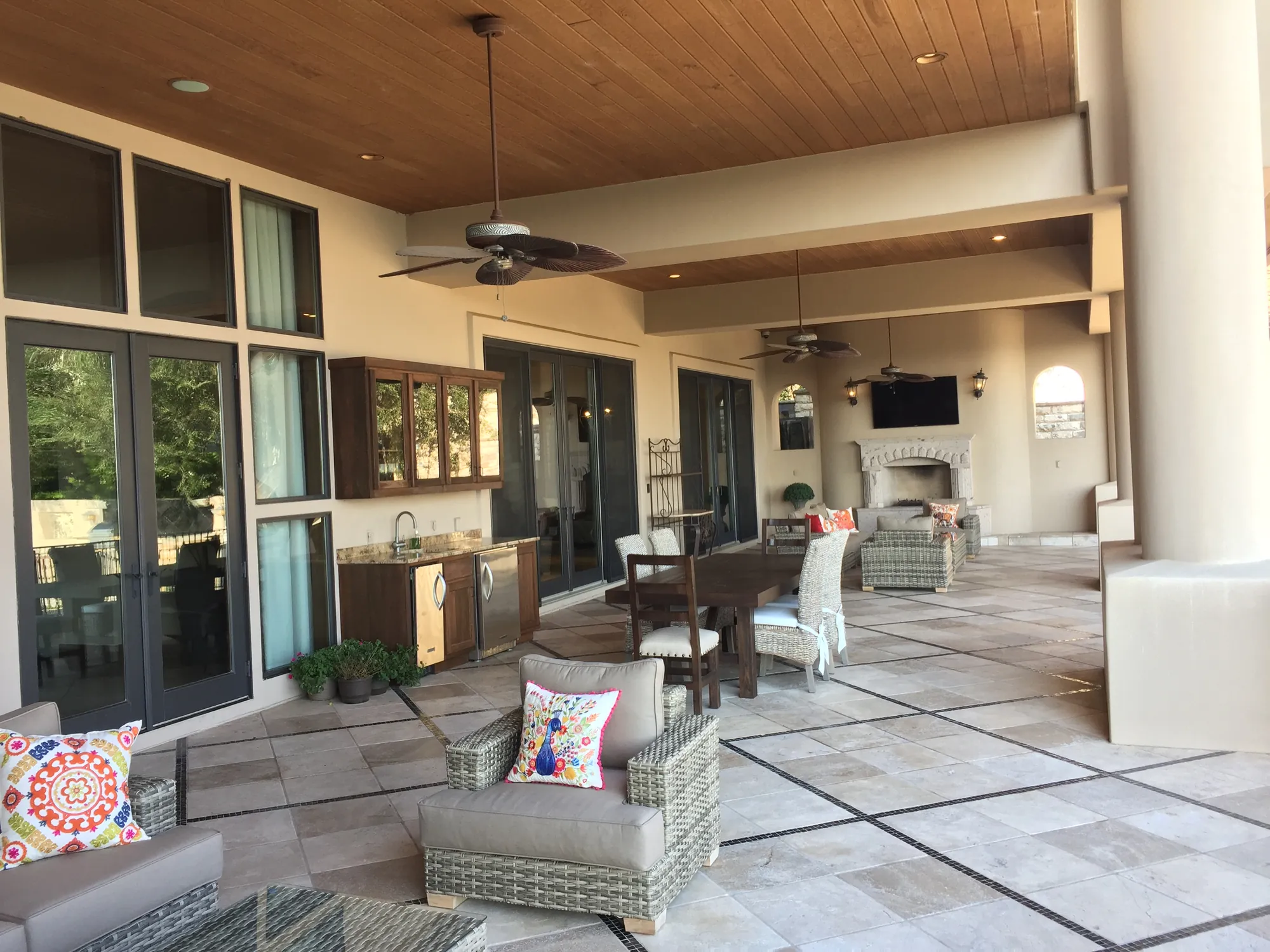
Casitas, shops, pool houses, barns — fiber runs and outdoor-rated access points carry the same network across the property. A specialty of Hill Country projects.
The equipment lives in a proper rack or media closet — powered, ventilated, labeled. Not a pile of blinking boxes behind the TV.
Networks we design can be diagnosed and usually fixed remotely. Most issues never need a truck roll — the call gets made, the problem gets solved.
Every automation system, every theater, every camera we install rides on the network underneath it. That is why we treat networking as its own discipline, not an afterthought. When we design an integration project, the network gets engineered first — switch capacity, access point placement, wired runs — because everything else inherits its quality.
We also build networks as standalone projects. If the house just needs WiFi that works in every room and a wired backbone that will carry the next fifteen years of devices, that is a project we take seriously on its own.
A property in Dripping Springs or west of Austin might have four thousand square feet of usable footprint spread across a main house, a casita, and a pool pavilion. Stone walls eat WiFi. Distances kill consumer mesh systems. We solve it the way it should be solved — fiber between buildings, enterprise access points rated for the outdoors, one network that behaves the same in every building.
It was built to check a box, not to carry a household. One radio in one corner of the house cannot serve dozens of devices through walls and floors. A designed network puts wired access points where the coverage is needed and a managed switch behind them.
The same class of hardware businesses run — managed switches, wired access points, proper power and ventilation — specified and configured for a home. It is not about blinking lights; it is about a network that performs the same on day 900 as day one.
Yes. Fiber between buildings and outdoor-rated access points carry one network across the property. Detached-building coverage is one of the most common problems we solve on Hill Country projects.
No. We design behind whatever modem your provider installs. The provider gets the internet to the house; we handle everything after that.
Networks we design are remotely serviceable. Most issues are diagnosed and resolved without a site visit, and when hardware does need attention, we know exactly what is installed and where.
Bellah designs and installs in Westlake Hills, Lakeway, Bee Cave, Dripping Springs, Barton Creek, Cedar Park, Dallas, Houston. See home automation, home theaters, or our full service area.
Scott does the walkthrough himself. About an hour. No charge, no quote on the spot — just a real conversation about what fits the home.
Book a Free Walkthrough